Why another genealogy tool?
November 9, 2026
Take a good look at this photograph. It was taken in Berlin, in May 1913. The two men in full dress uniform have the same beard, the same height, the same faintly bored expression: you would take them for twins. One is George V, King of England. The other is Nicholas II, Tsar of all the Russias. They are first cousins, both grandsons of the same King of Denmark. Fourteen months later, their countries were at war.
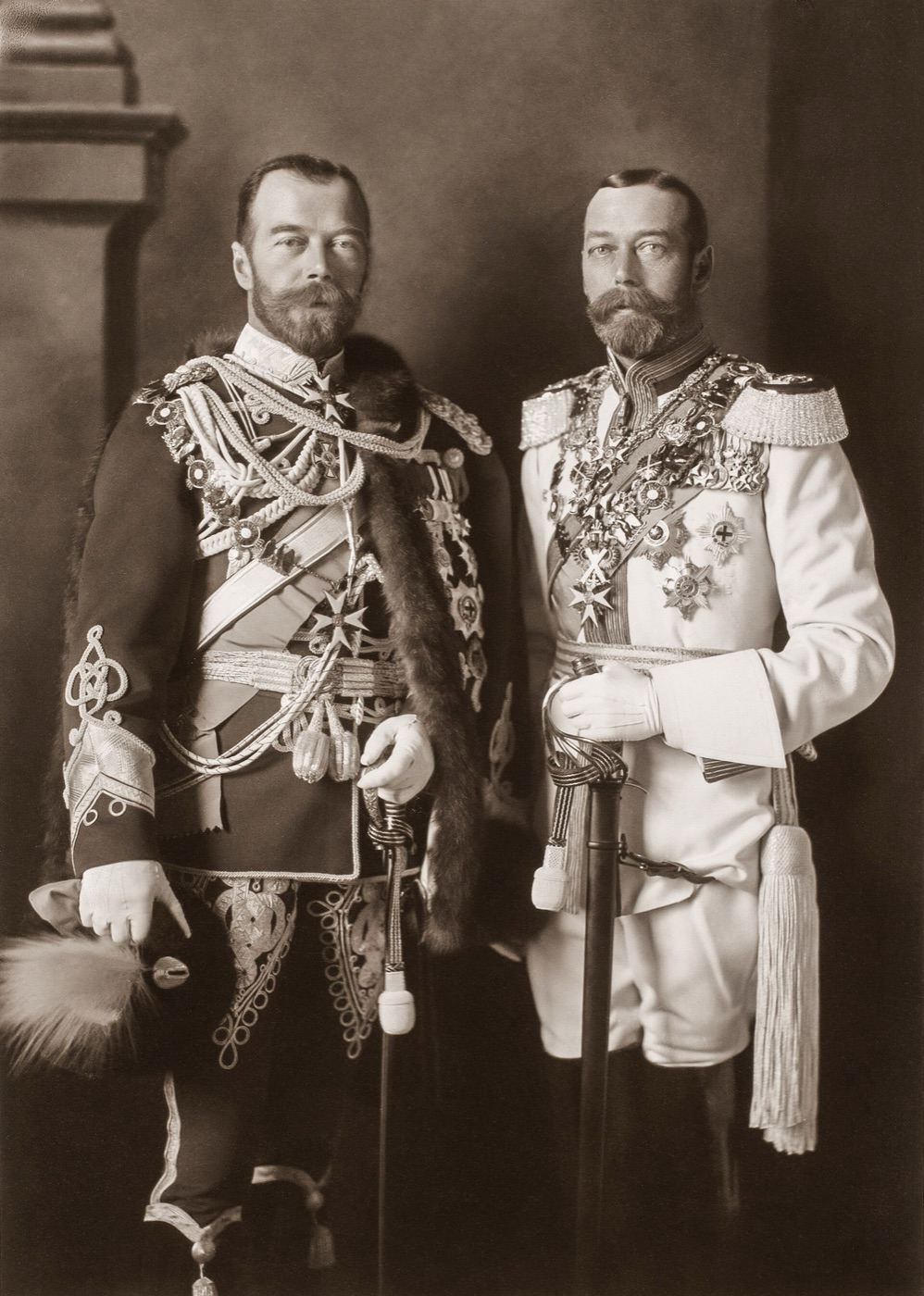
I came across this story reading Catrine Clay's King, Kaiser, Tsar — three cousins, three empires, and a world war at the end of the chain. But what struck me most in that book was not the grand history. It was that the author had been obliged to put a small, single-page family tree at the very front. Without it, you understand nothing. With it, everything becomes clear, including the worst of it.
And meanwhile, the American presidents
You might think this cousinage business is a speciality of monarchies. Not at all. Among the presidents of the United States you will find two father-and-son pairs — the Adamses, the Bushes —, a grandfather and his grandson — the Harrisons —, second cousins — Madison and Taylor — and fifth cousins — Theodore and Franklin Roosevelt. And if you go back a little further, a good many of them descend from English royalty, something patient genealogists have charted.

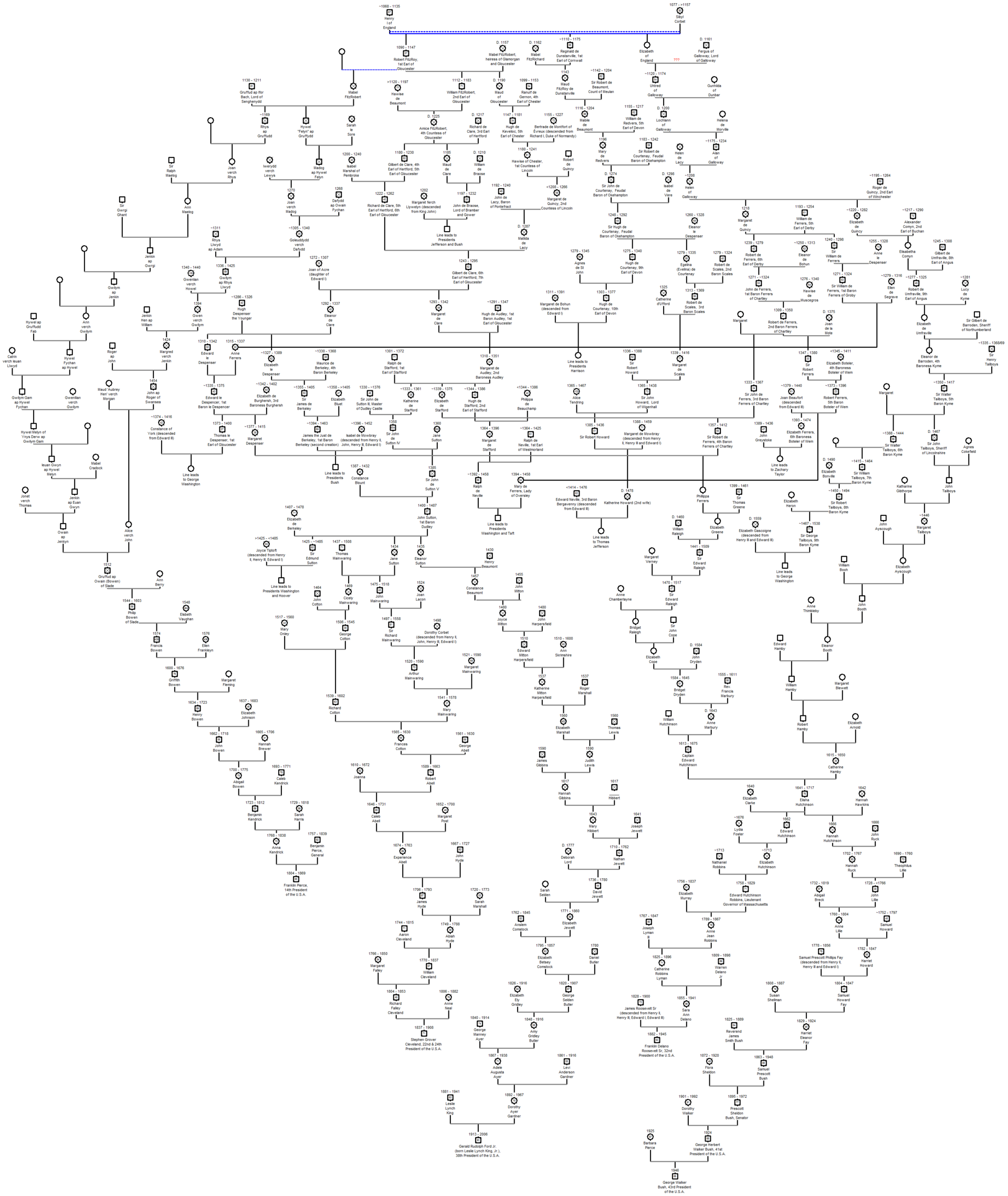
That, fundamentally, is what genealogy is for: making legible what you never suspected. And that is also why a family tree is only worth something if you can look at it, dig through it, and show it to other people.
The problem isn't families, it's the software
Two years ago I published the Guide pratique de la Généalogie 2.0. While preparing it I went through hundreds of family trees, and drew a slightly dispiriting conclusion: what looks simple at first sight almost always turns out to be complicated. Not because of genealogy — because of the tools. The software has become so sophisticated that its users get lost in it. Options everywhere, automatic matches that cheerfully confuse namesakes, and errors copied from one tree to the next until they become family truths.
On top of that comes a more prosaic failing: you have to get your credit card out before you have been able to enter your own grandfather.
GeneaFree is the tool I would have liked to find when I started. Here is what it does, and why.
Free for small trees. Genuinely free.
One tree, fifty people, ten megabytes of photos: that is the free plan, and it never expires. No credit card, no fourteen-day trial at the end of which everything closes down.
Fifty people sounds like very little? That is your four grandparents, their brothers and sisters, your parents, your first cousins. Enough to know whether the tool suits you before spending a penny. Beyond that, subscriptions start at €29 a year and can be cancelled at any time. That's all.
Tools to look your own data in the face
Import a GEDCOM of a few thousand people and you will watch your great-great-grandfather appear in four copies, with four different spellings. The duplicate finder compares names and dates and hands you the list of suspects; the decision is yours.
The dashboard then gives you the most frequent surnames, births by century, isolated family clusters. And the mapping puts every birth, marriage and death place in your tree onto a map of the world.
These are not gadgets. This is precisely where you discover that half the family came out of three neighbouring villages, or that in one whole branch nobody got past fifty. The duplicate finder and the dashboard are part of the paid plans; the map is open to everyone.
Ordering a death certificate without losing an afternoon
Anyone who has tried knows what I am talking about. Every town hall has its own form, its own platform, its own required fields and its own personal interpretation of what an online service is. GeneaFree knows about sixty of them, spread across some fifteen different platforms, and fills in the request for you from the person's record.
Let's be honest: the feature is still in beta, restricted to testers. It does not work everywhere — some towns protect their form with a captcha, others demand FranceConnect, and the French national death register only goes back to 1970. But when it works, it gives you your afternoon back.
Sharing a tree without making the whole family open an account
The usual scenario: you export a twelve-megabyte PDF, send it to thirty people, three reply, and two months later an aunt phones to tell you her father's date of birth is wrong.
Here, you send a link. Read-only. Whoever receives it has no account to create, and you keep control of what is published. The fuller subscriptions go further and allow several people to write, because there is always, in a family, a cousin who knows more than you do.
Print it, export it, frame it
A tree that stays inside a browser is not much use on your mother's eightieth birthday. GeneaFree produces a real vector PDF in A4 — not a blurry screenshot blown up —, a high-resolution image at around 288 dots per inch, and prints directly if you prefer. Enough to walk into the local print shop without needing me.
And all the rest, to discover
GEDCOM 5.5.1 import and export, because your data is yours and must be able to leave. Matches between GeneaFree trees, which tell you a stranger is working on the same branch as you. Some fifteen public databases searchable straight from a person's record — the French national death register, Geneanet, FamilySearch, Gallica, Europeana, Wikidata, the British, Swedish and Australian national archives. Automatic analysis of a photographed old document. The kinship calculator between any two people in the tree, with the full path exportable as an image, for the curious who would like to check my royal cousin stories. And the whole site in thirteen languages.
What you will read here
GeneaFree is not finished, and never will be: that is the nature of living software. This blog will tell you what I add to it, why I add it, and what breaks along the way — because things will break, and I would rather talk about them here than pretend otherwise.
In the meantime, open an account, it's free, and start with your four grandparents. You'll see soon enough how far it takes you. Perhaps to a cousin you would never have suspected existed — failing a tsar.
Also in : 🇸🇦 العربية · 🇩🇪 Deutsch · 🇪🇸 Español · 🇫🇷 Français · 🇮🇹 Italiano · 🇵🇱 Polski · 🇵🇹 Português · 🇷🇺 Русский · 🇸🇪 Svenska · 🇹🇭 ภาษาไทย · 🇹🇷 Türkçe · 🇨🇳 中文